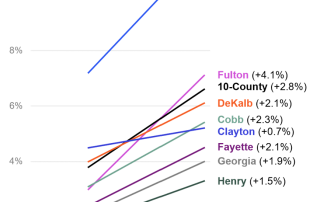
Metro Atlanta is home to a diverse and growing Asian community
A quick look at the growth rates of Asian population across the metro, and at which countries they and/or their families once called home.



A quick look at the growth rates of Asian population across the metro, and at which countries they and/or their families once called home.
A look at non-pandemic differences in men's and women's labor force participation by age grouping, with a look at long-term career and earnings implications.
This month's regional snapshot presents a detailed look at housing market conditions and affordability challenges, and reviews existing threats and aid initiatives.
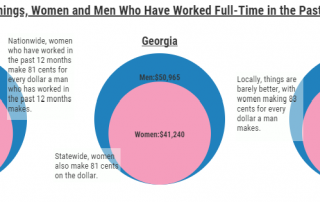
A look at women's earnings as a percent of men's, using 2015-2019 American Community Survey rolling averages.
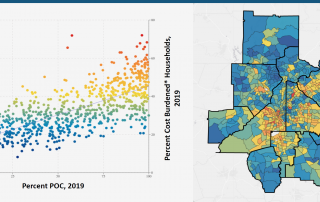
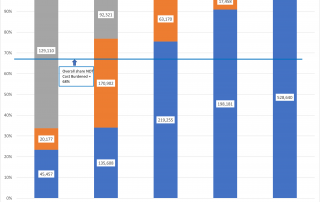
About a third of Atlanta households are defined as cost-burdened (spending more than 30 percent of income on housing). BUT those cost burdens go up...a lot...for renters, for lower-earners, or (especially) for lower-income renters.
Celebrating the life of the incomparable W.E.B Du Bois through a series of maps and charts that show just how long the arc of data visualization history in Georgia actually is.
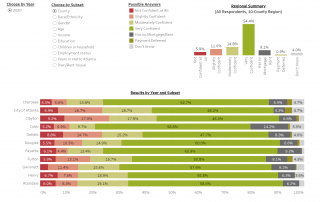
Data from two surveys show that housing affordability worries are all too real for Atlantans, and are growing despite initial policy efforts.
The Atlanta Black population's higher educational attainment has soared over the last fifty years. The share of Black higher ed degree holders has grown by 500 percent since 1970, besting the related share in the rest of the population, which grew by 350 percent.
Black-owned businesses make up a much larger share of the Atlanta metro business base than they do at the national level, and a relatively large share of these businesses are small.
Prior to the COVID pandemic, students in the metro Atlanta region were making progress in 3rd grade literacy, with rates of students proficient and above increasing 5 percentage points between the 2017-2018 and 2018-2019 academic years. For Black and Latinx students the percentage of students proficient and above in 3rd grade literacy increased by 5 and 4 percentage points respectively. The pandemic’s impact on our education and social structures, however, is threatening these gains.