Hispanic Heritage 2021: Growth on the Horizon
A look at coming population growth in the metro area's Hispanic community.



A look at coming population growth in the metro area's Hispanic community.
Comparisons for hospitalizations and ER visits for the flu, heart disease and COVID-19 are less dramatically uneven than what we saw in our examination of COVID death data. But we still see that COVID-19 comes out on top when it comes to things that sent us to the hospital in 2020.
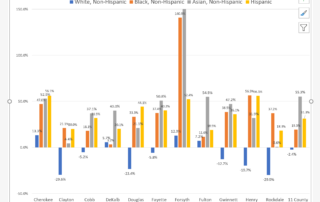
This month (September 15-October 15) is Hispanic Heritage Month. We have a commemorative compendium of the latest data on this core growth component of our region's population. Installment 1 of 3 is current population trends!
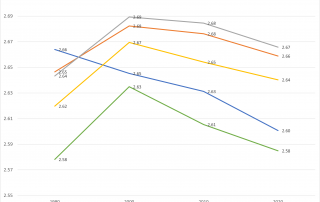
Population growth is declining recently, but what's happening to household size? Well, a little bit of everything, depending on where you look
On the eve of eviction moratoriums expiring, we examine new data in the Eviction Tracker tool and explore its value in helping residents throughout the region.
This next segment of our population decline series takes a look at death rates (total and age-adjusted) from 2000-2019, then reviews early indications for 2020 change.
What can data from the Small Business Pulse survey tell us about how Atlanta's businesses fared and what they expect in the near future? This blog post explores a few findings from the final data from the Small Business Pulse Survey.
To wind up Older Americans Month, we take a look at results for the senior cohorts from the 2020 Metro Atlanta Speaks survey. Focal areas are: the biggest problem for the region, COVID-19 impacts, race relations, and police reform.
150 years ago, Atlanta's washerwomen launched a strike against unsafe working conditions. Today, the housekeeping sector remains female-dominated and underpaid, with workers facing renewed health concerns.
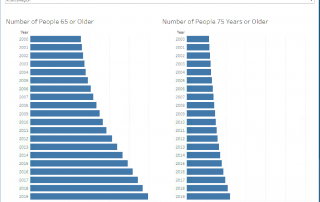
Introducing a new dashboard that visualizes change (total and by race/ ethnicity) over the last 20 years for regional and county 65+ and 75+ populations.