


In two recent blog posts, we looked at population change for the Atlanta MSA[1] in the context of other top metros. In the first post, we saw that despite slowed nationwide growth, metro Atlanta added just shy of 62,000 inhabitants between July 1, 2024 and June 30, 2025, making it the sixth most populous metro area in the country. The second post explored growth trends for the top metros in terms of the components of population change. How have these population increases been distributed around the region, and how does change in metro Atlanta counties compare to counties in the rest of the state?
Figure 1 presents population estimates for the 29 counties in the Atlanta MSA, as of July 1, 2025:
Figure 1: Population Estimates by County, Atlanta MSA, 2025
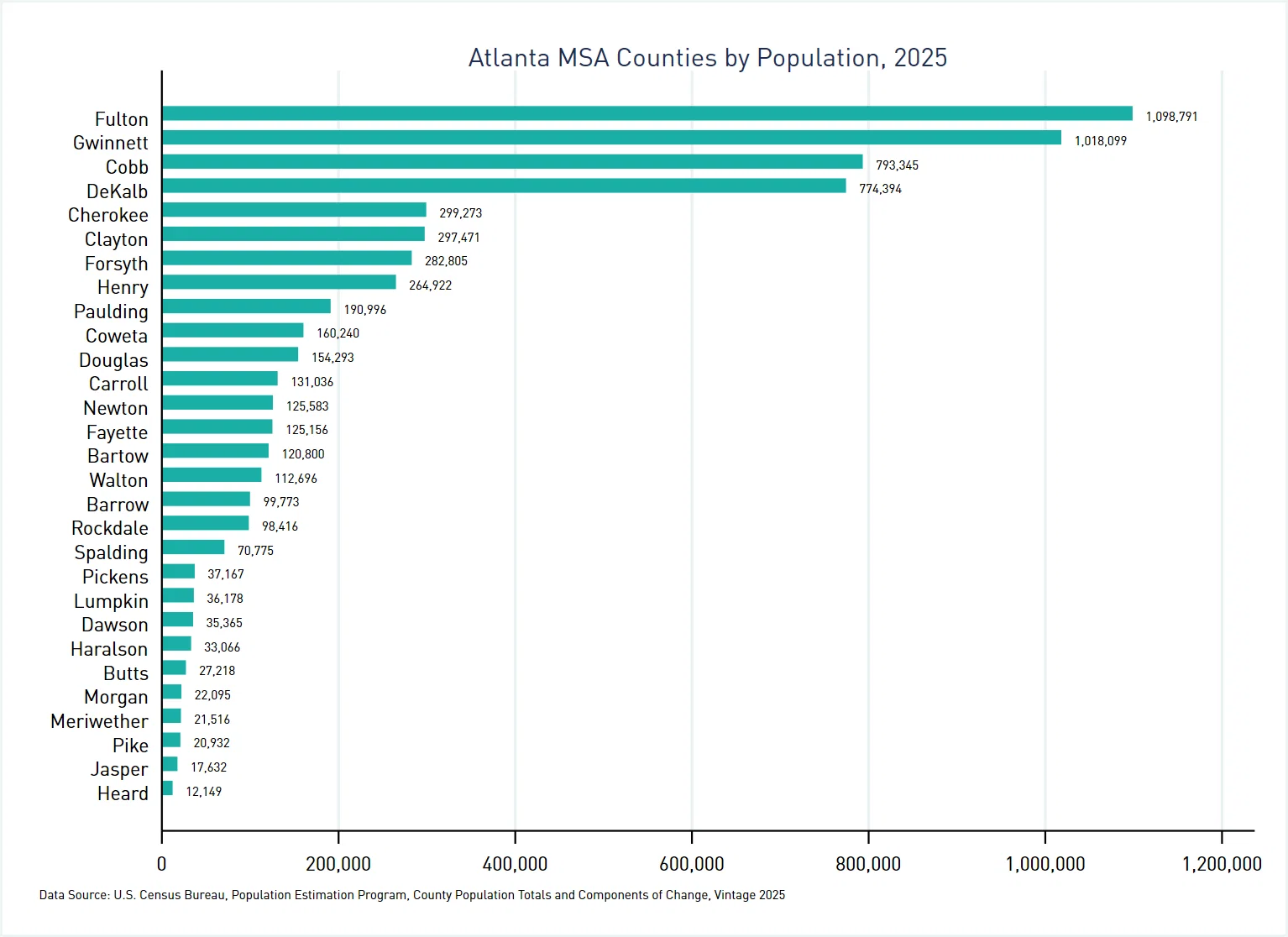
It should come as no surprise that Fulton, Gwinnett, Cobb, and DeKalb– counties making up Atlanta’s urban core– are the most populous. But then things get interesting: Clayton County, which had occupied the fifth spot in the population rankings for quite some time, exchanged places with Cherokee County. Other county pairs that swapped ranks between 2024 and 2025 are Newton surpassing Fayette and Barrow outgrowing Rockdale.
How did we get here? Figure 2 shows population change between 2024 and 2025 by county:
Figure 2: Population Change by County, Atlanta MSA, 2024-25
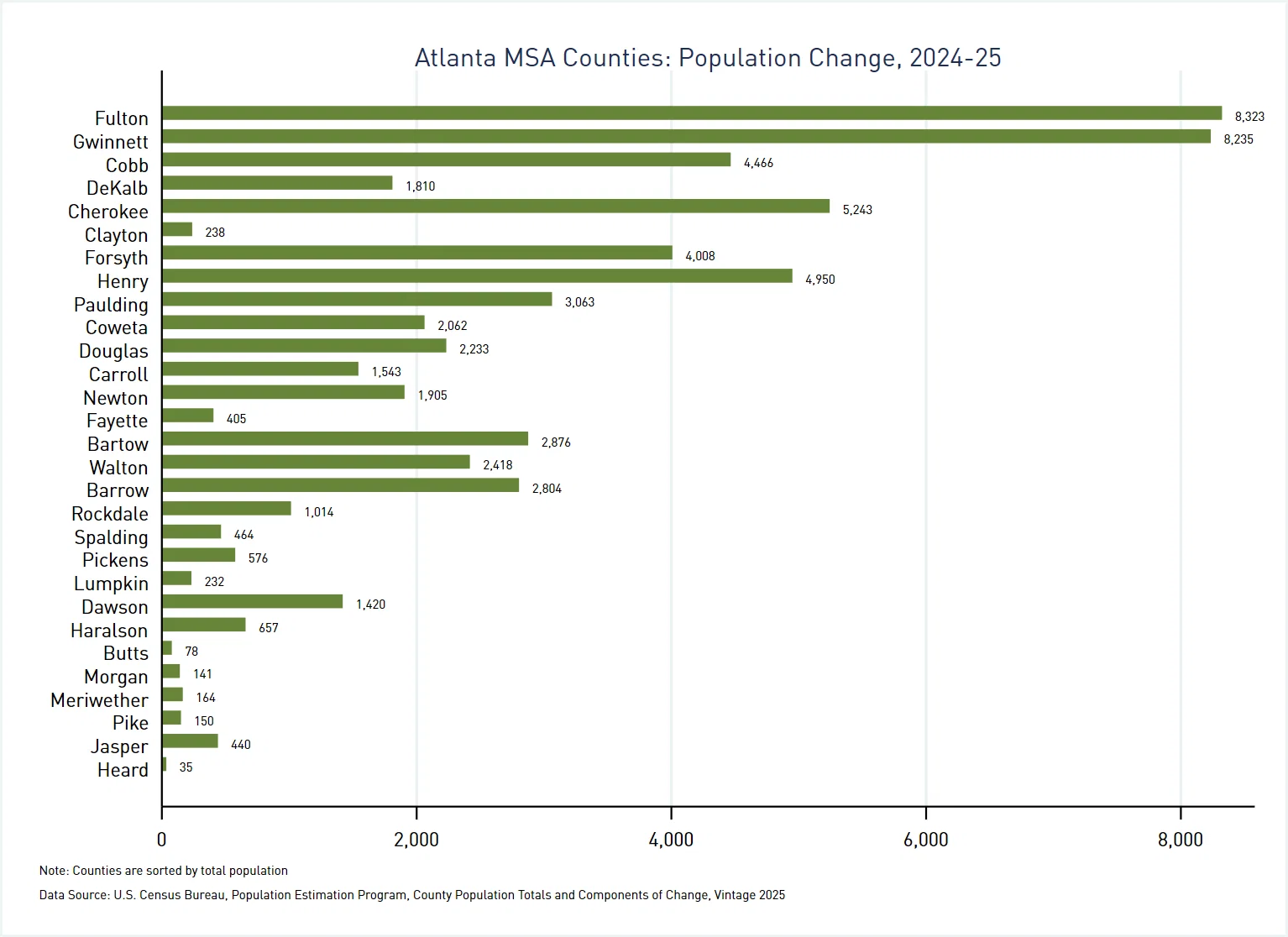
We see that Fulton and Gwinnett– the two largest counties– also posted the greatest population growth. Cherokee County added the third largest number of people, enough to surpass Clayton County as noted above. For its part, Clayton County gained a small number of people– a reversal from its population loss in the prior year.[2] And while the gains were modest in several counties, no county within the MSA lost population.
Because counties in the Atlanta MSA vary widely in terms of population, this same population change looks a bit different if we view it in relative terms. Figure 3 presents population change between 2024 and 2025 in percentage terms; the reference line denotes the overall change for the MSA:
Figure 3: Percent Population Change by County, Atlanta MSA, 2024-25
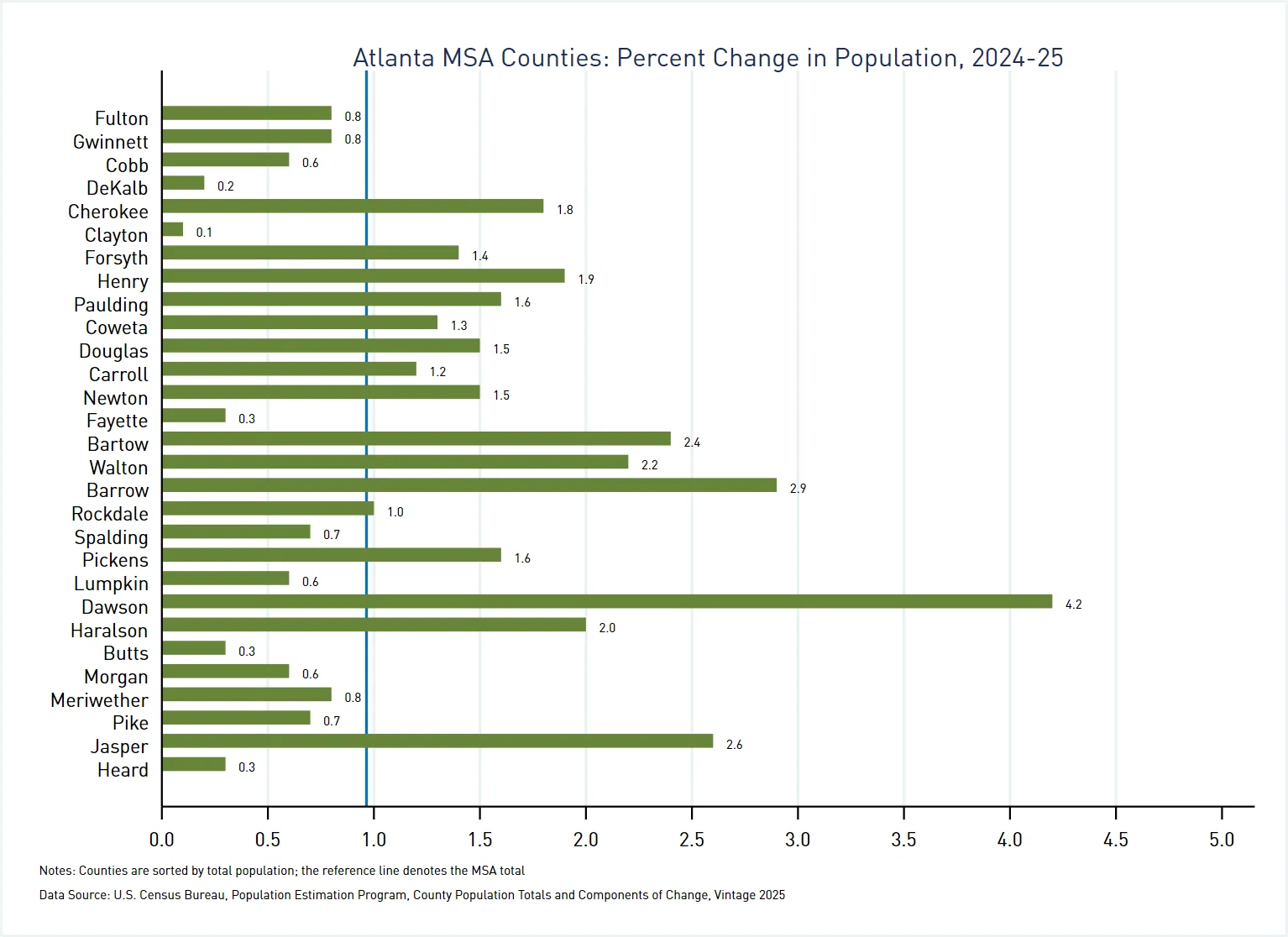
While the core counties of Fulton, Gwinnett, Cobb, and DeKalb posted the largest absolute gains, they grew more slowly than the region as a whole on a percentage basis. At the other end of the growth spectrum, Dawson County grew more than four times the rate of the region as a whole.
Figure 4 presents percent population change by county for the entire state, allowing us to explore the spatial distribution of this population growth:
Figure 4: Percent Population Change by County, Georgia Statewide, 2024-25
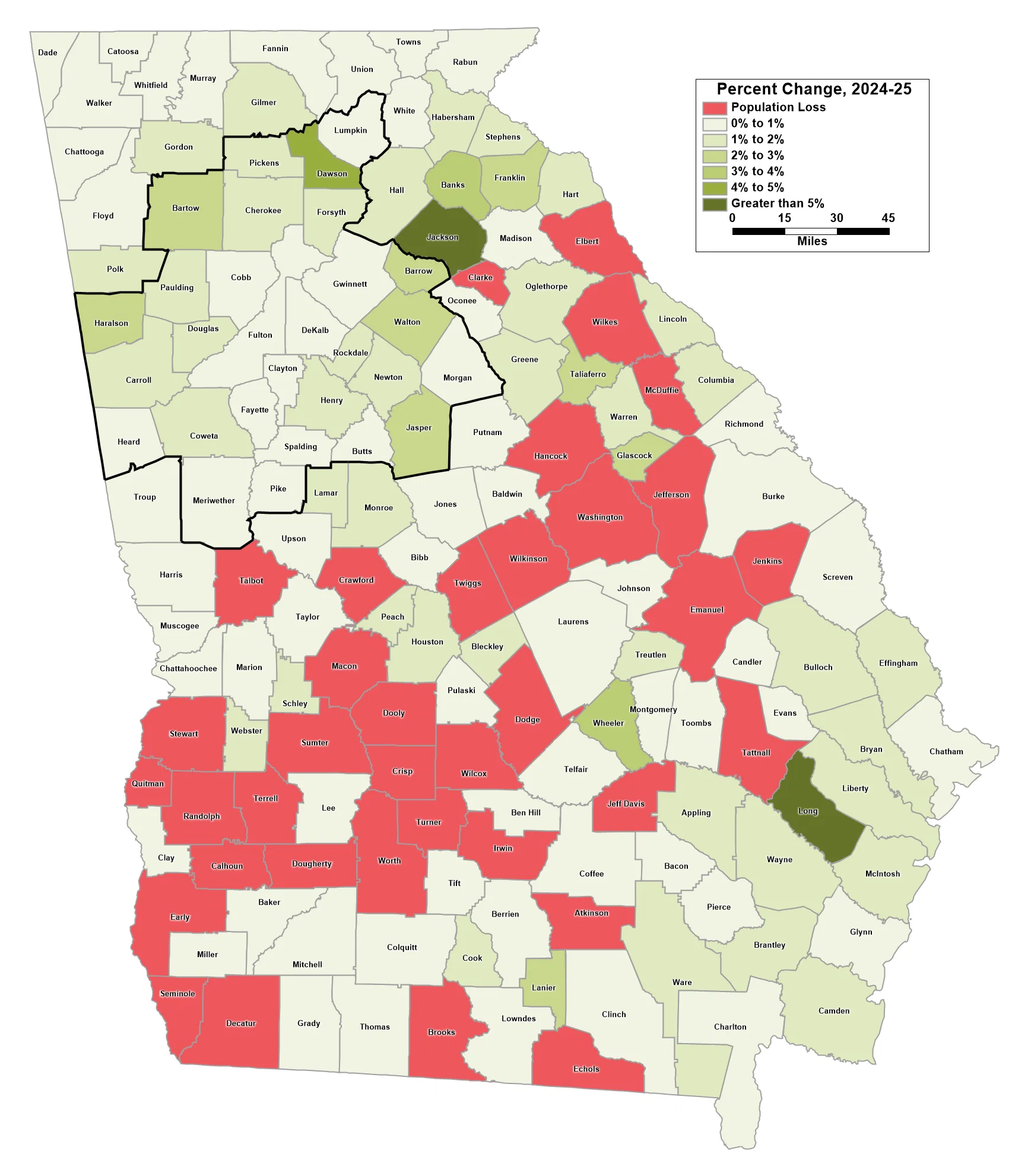
This map reveals that in percentage terms, the core MSA counties posted modest growth of less than 1%. Except to the south, this core is surrounded by counties that posted stronger growth in the range of 1-3%. The strongest growth was in counties at the periphery of the MSA in Dawson County and just outside, in Jackson County.[3] Growth tails off to more modest levels to the east, while a number of counties in a band starting in southwestern corner of the state and running northeast posted population losses.[4]
What dynamics are driving these changes? We will dig into the components of population change for metro Atlanta counties in the fourth, and final, post in this series.
Notes:
[1] Or, to use its official name, the Atlanta-Sandy Springs-Roswell, GA Metropolitan Statistical Area.
[2] The Census Bureau estimates that Clayton County has lost population three out of the last five years, with a net loss of 1,874 people over the course of that period.
[3] With a growth rate of 5.3%, Jackson County ranked fourth in percent growth nationwide among counties with 20,000 or more population, according to the Census Bureau’s press release accompanying this year’s estimates. The manufacturing boom that drove Jackson County’s growth has lost steam, as Federal policy shifts away from electric vehicles have depressed demand for items produced there. Any impact from these changes will not appear until the 2026 estimates, due out next spring.
[4] One notable exception is Long County, ranked fifth on the Census Bureau’s percent growth list, with 5.2% growth year-over-year.
Download the data utilized in this blog post: Georgia County Pop Estimates 2025 Vintage