

Hot summer streets and the pavements are burning.[1] It’s summer in Atlanta, the season of air you can wear[2] and the time when we most appreciate our air conditioners. But many households lack access to Mr. Carrier’s invention, leaving residents at risk during periods of extreme heat. Where are these vulnerable populations located in our region?
Recognizing the need for targeted interventions during extreme heat events, the Census Bureau has released a new experimental data product called the Local Air Conditioning Estimates (LACE). This dataset provides estimates for Census tracts achieved through cross-survey modeling.[3]
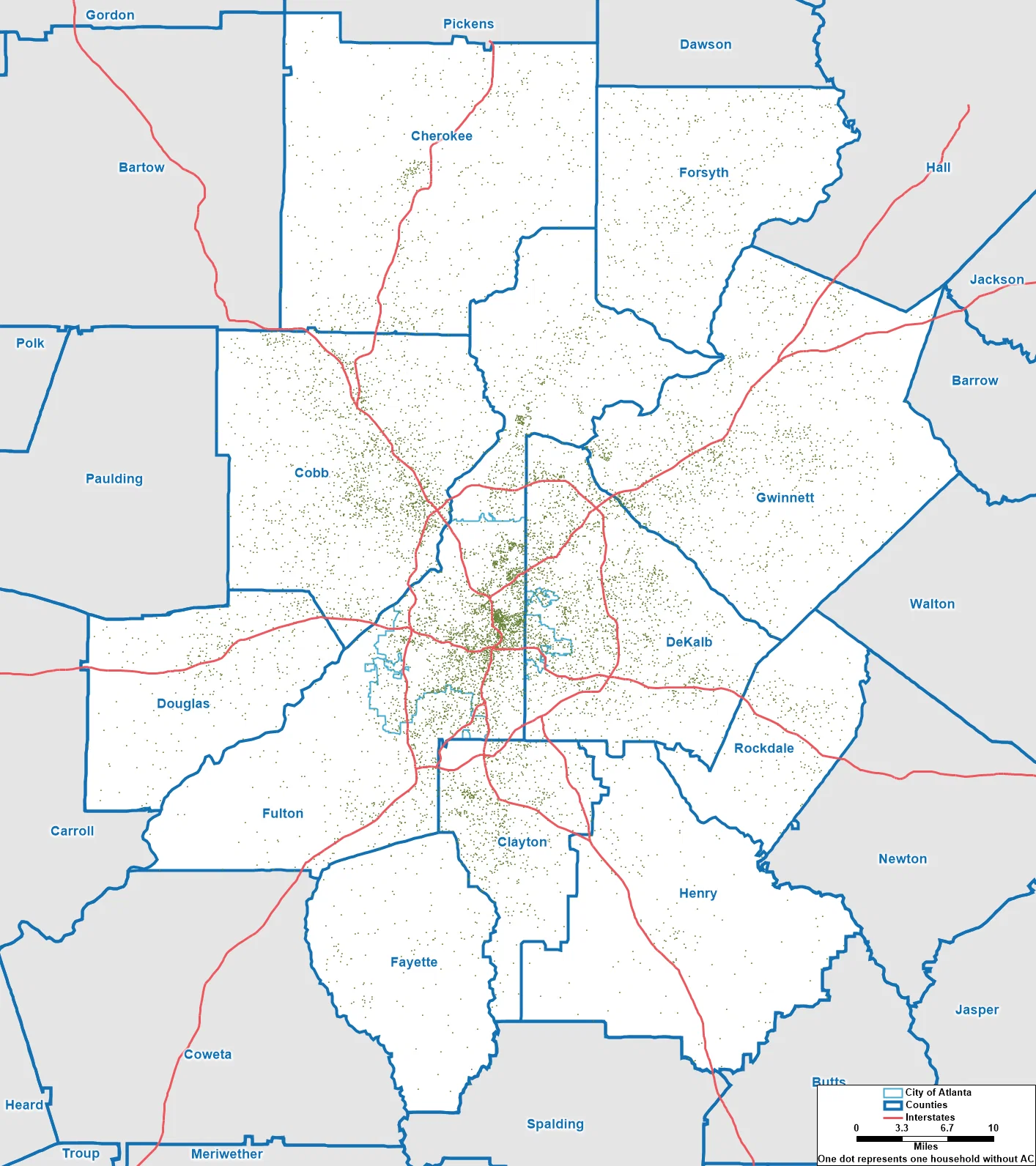
Figure 1 provides a dot-density map of households without air conditioning for the 11-County ARC region. One dot represents one household:
Figure 1: Households in the ARC Region without Air Conditioning, 2023
Source: U.S. Census Bureau, Local Air Conditioning Estimates, 2023 Release
This map shows that households without air conditioning exist throughout the region, but also reveals clusters near some of the major highways, especially in the City of Atlanta.
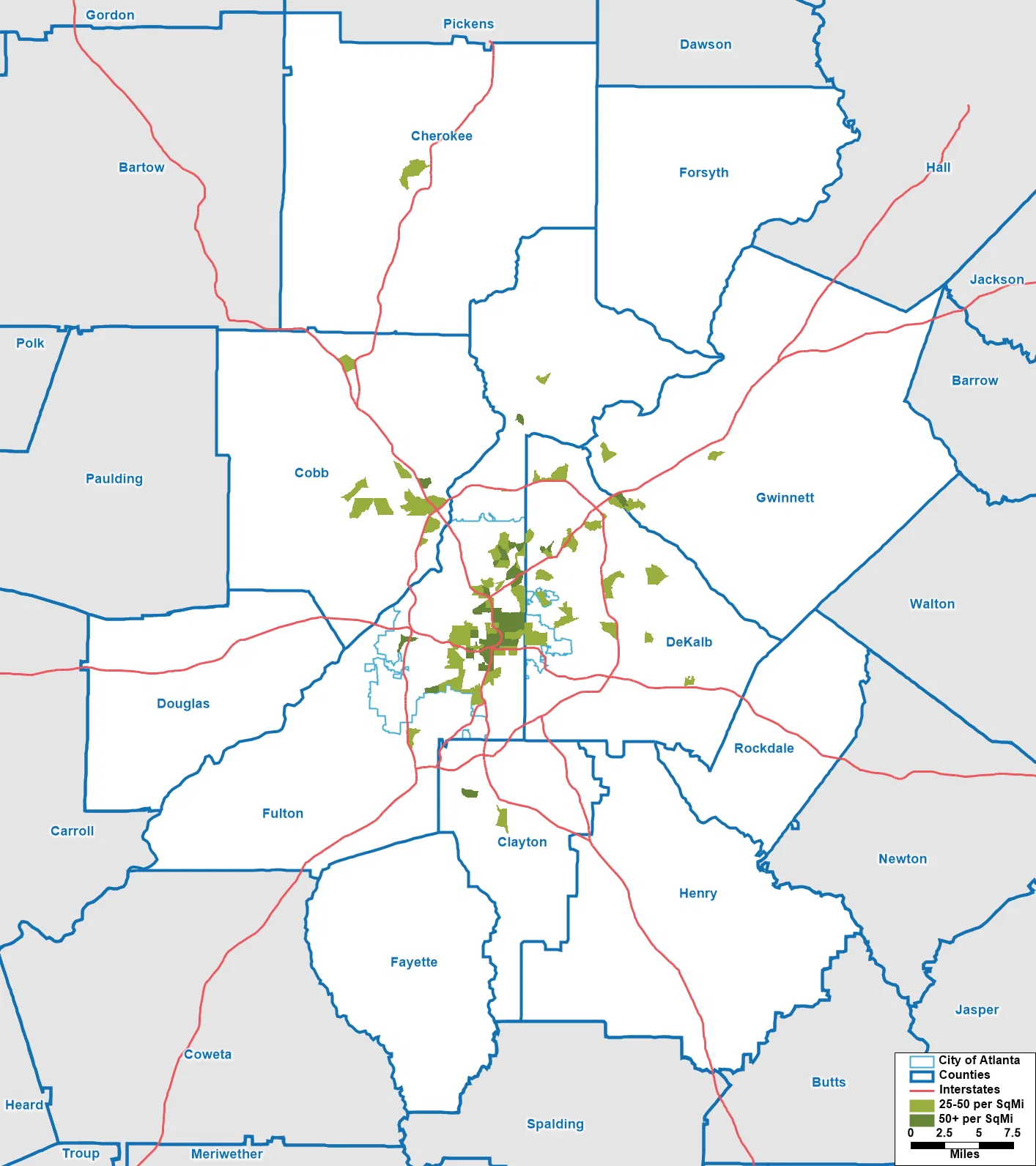
Cooling centers can help the most if placed accessibly to concentrations of people without AC. Figure 2 identifies such areas with a high density of households lacking air conditioning. Lighter green tracts have 25-50 households without air conditioning per square mile; darker tracts have 50 or more.
Figure 2: Census Tracts in the ARC Region with a High Density of Households without Air Conditioning, 2023
Source: U.S. Census Bureau, Local Air Conditioning Estimates, 2023 Release
This map again shows that the City of Atlanta has the most areas ripe for a cooling center, though other counties have areas of high need as well. High need tracts can be found in Cherokee County in Canton; in north Fulton in Sandy Springs and Roswell; in Gwinnett in Peachtree Corners, an unincorporated area south of 85 between Lilburn and Lawrenceville, and along I-85 on the DeKalb border; in DeKalb in Tucker, Clarkston, Redan, Stonecrest, and Decatur; in Clayton near Riverdale; in south Fulton in East Point; and in Cobb County in and near Smyrna and Kennesaw State.
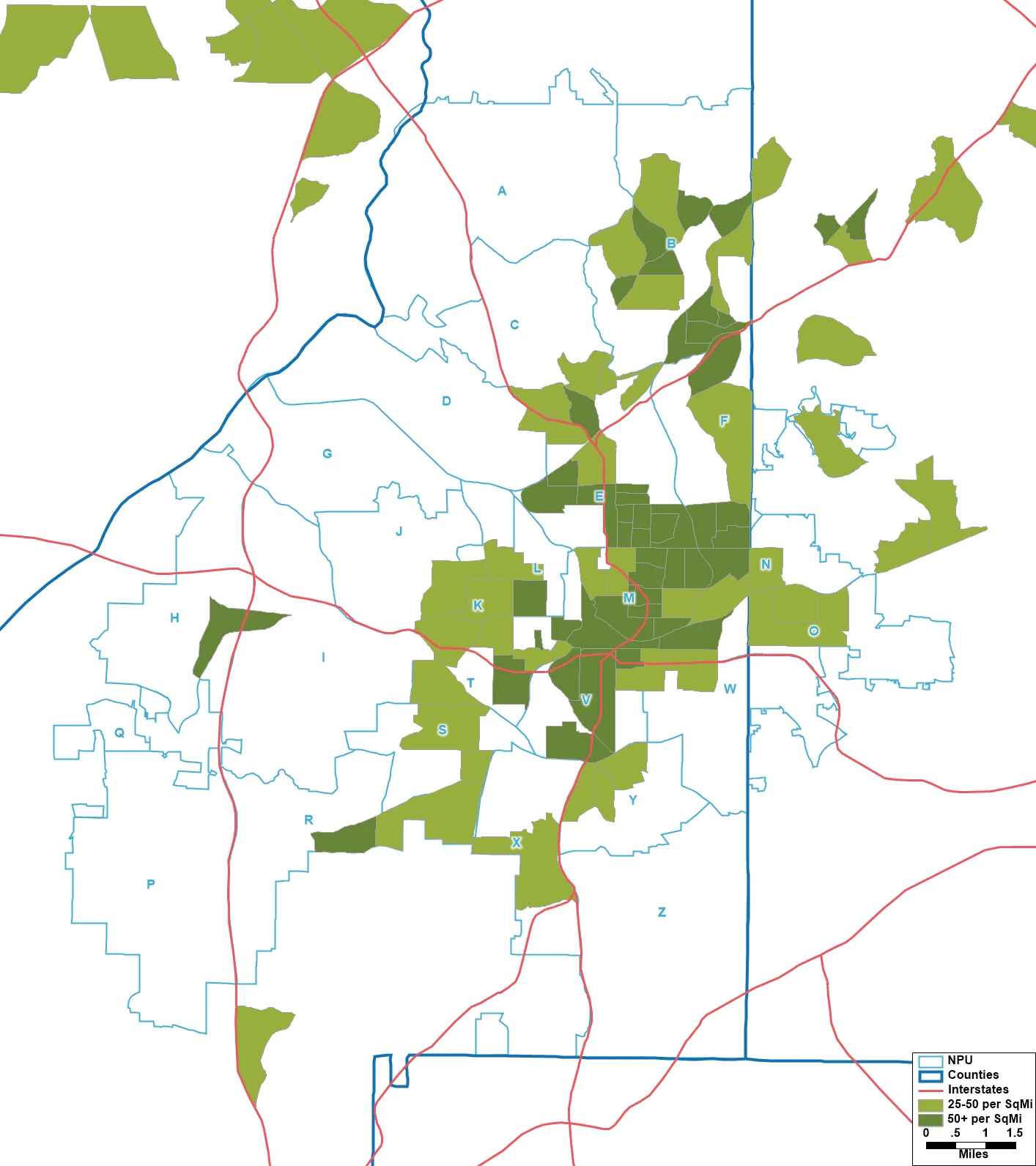
To better understand needs within the City of Atlanta, Figure 3 focuses on the city itself.
Figure 3: Census Tracts in and near the City of Atlanta with a High Density of Households without Air Conditioning, 2023
Source: U.S. Census Bureau, Local Air Conditioning Estimates, 2023 Release
Some of the highest density areas within the city include NPU B (Ridgedale Park and Lindbergh/Morosgo); NPU F (Virginia Highland and Poncey Highland); NPU H (Adamsville); NPU L (Vine City); NPU M (Old Fourth Ward and Downtown); NPU N (Cabbagetown); NPU T (West End); NPU V (Mechanicsville and Pittsburgh); and NPU R (Campbellton Road)
These findings highlight a clear opportunity to pair local knowledge of community facilities with the LACE data to guide where cooling centers and outreach can have the greatest impact. With summer heat intensifying, now is the time to leverage these data to protect the residents who need it most.
Notes:
[1] It’s a cruel, cruel summer.
[2] Phrase popularized by (now retired) meteorologist Karen Minton.
[3] The American Housing Survey has an air conditioning question but an insufficient sample to yield small area estimates. On the other hand, the American Community Survey has a much larger sample but lacks an air conditioning question. Cross-survey modeling combines the two to fill our knowledge gap.